 By Keira Collin
Singapore’s endurance sports scene is more active than most people outside the community realise. The annual marathon draws tens of thousands of participants. Triathlon clubs meet before dawn at East Coast Park several times a week. Obstacle course racing, open water swimming, and long-distance cycling all have thriving communities across the island. Many of these athletes are not professionals. They are lawyers, engineers, bankers, and teachers who wake up at five in the morning to train before heading to demanding office jobs.
What unites most of them at some point in their athletic careers is the experience of an overuse injury, a performance ceiling they cannot seem to break through, or a creeping sense that their bodies are not recovering the way they used to. This is the point at which reformer pilates Singapore is increasingly entering the conversation, not as a rehabilitation tool for the injured, but as a performance and longevity strategy for athletes who want to keep going.
The Specific Ways Endurance Training Creates Imbalance
Endurance sports are repetitive by nature. Running involves thousands of identical foot strikes per session. Cycling locks the body into a fixed forward-flexed position for hours at a time. Swimming overloads the shoulder complex through high-volume overhead pulling. Each of these activities, performed consistently over months and years, creates predictable muscular imbalances that accumulate silently until they become injuries or performance limitations.
The most common patterns seen in Singapore’s endurance athlete population include:
Hip flexor dominance and glute inhibition Running and cycling both reinforce hip flexor strength while allowing the gluteal muscles, particularly gluteus medius and gluteus maximus, to become progressively underactive. When the glutes stop doing their job properly, the hip flexors, hamstrings, and lower back compensate, leading to IT band syndrome, patellofemoral pain, and lumbar strain, all extremely common complaints among Singapore’s recreational runners.
Thoracic rigidity Hours in the forward-flexed position of cycling, combined with desk work, progressively stiffens the mid and upper back. This restriction forces compensatory movement through the lumbar spine and shoulders, increasing injury risk in both areas and reducing the efficiency of breathing mechanics during high-intensity efforts.
Lateral chain weakness Endurance sports operate primarily in the sagittal plane, meaning forward and backward movement. The lateral stabilisers of the hip, trunk, and shoulder are rarely meaningfully loaded. This creates a lateral chain that is weak relative to the demands placed on it during impact, cornering, and terrain changes in trail running and triathlon transitions.
Ankle and foot complex dysfunction Singapore’s endurance athletes often train in highly cushioned footwear that reduces sensory feedback from the foot. Over time, the intrinsic muscles of the foot and ankle become underactive, reducing the dynamic stability that protects against ankle sprains, plantar fasciitis, and stress fractures.
Why the Reformer Addresses These Patterns Better Than the Gym
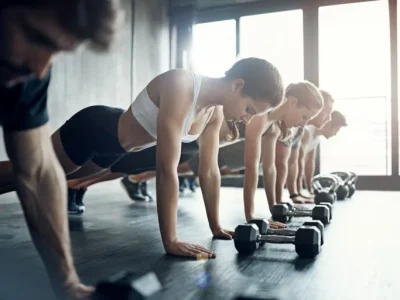
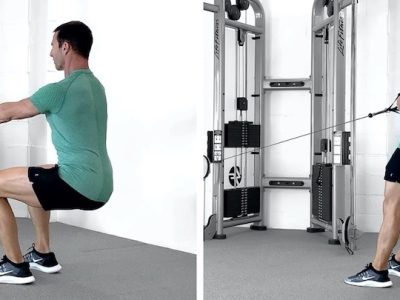
Many endurance athletes turn to the gym when they recognise these imbalances. They add squats, deadlifts, and hip thrusts to their programme. This is not a bad instinct, but it has significant limitations. Heavy bilateral loading in the gym does not replicate the unilateral, multi-planar demands of endurance sport. It also does not address the neuromuscular inhibition patterns that have developed through years of sport-specific repetition.
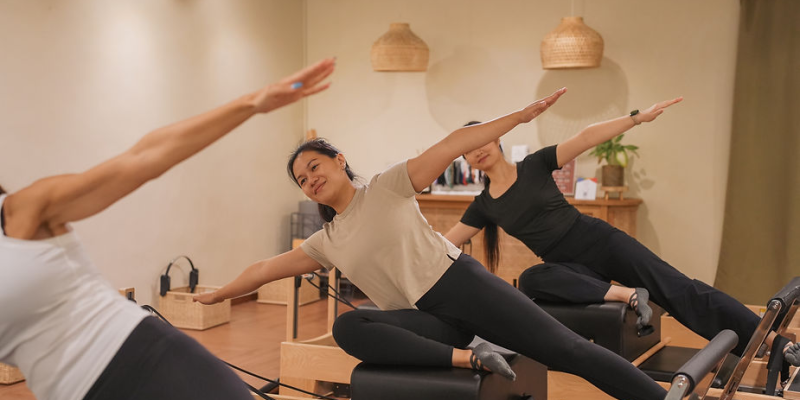
The reformer is uniquely effective for endurance athletes for several specific reasons.
The spring resistance provides variable, accommodating resistance that can be calibrated precisely to the athlete’s capacity. This allows the reformer to load muscles like the gluteus medius at intensities that are actually challenging without the compressive spinal loading that heavy gym work entails.
The moving carriage creates instability that forces the neuromuscular system to activate stabilisers in real time, not just prime movers. This replicates the stability demands of sport far more accurately than fixed-plane gym machines.
The long box and footbar positions allow the reformer to load the thoracic spine into extension and rotation in ways that directly counteract the forward-flexed rigidity accumulated through endurance training.
Single-leg reformer exercises like single-leg footwork, single-leg long stretch, and standing lateral exercises directly challenge the lateral chain in a controlled environment where compensatory movement is visible and correctable.
Hot Reformer for Post-Training Recovery
One of the most practical applications of reformer pilates for endurance athletes in Singapore is as a recovery tool. Hot Reformer sessions, where the room is heated to promote muscle relaxation and circulation, are particularly effective in this context.
The physiological mechanisms behind heat-assisted recovery include:
- Increased blood flow to muscle tissue, accelerating the delivery of nutrients and removal of metabolic waste
- Reduced muscle spindle activity, meaning muscles relax more completely and accept lengthening more readily
- Improved fascial extensibility, allowing connective tissue to release restrictions that accumulate through training volume
- Activation of heat shock proteins, which support cellular repair processes in muscle tissue
For a Singapore triathlete or marathon runner doing key training sessions on Tuesday, Thursday, and Saturday, a Hot Reformer session on Wednesday or Sunday can meaningfully accelerate recovery and reduce the cumulative fatigue load that eventually leads to injury or overtraining.
Breathing Mechanics and Endurance Performance
One of the less obvious ways reformer pilates improves endurance performance is through its effect on respiratory mechanics. Diaphragmatic breathing, which is central to reformer pilates practice, directly improves the efficiency of gas exchange during aerobic exercise.
Many endurance athletes, particularly those with tight thoracic spines and overactive accessory breathing muscles, are not using their diaphragm as their primary breathing muscle. They breathe from the chest and upper ribcage, which is less mechanically efficient and increases the energy cost of breathing during high-intensity efforts.
Reformer pilates specifically targets the coordination of the diaphragm with the deep abdominal and pelvic floor muscles. As this coordination improves through consistent practice, athletes often notice that they can sustain harder efforts for longer before reaching respiratory limitation, and that recovery breathing after hard intervals becomes faster and more effective.
Managing the Transition from Sport to Reformer
Endurance athletes often find the first few weeks of reformer pilates humbling in a way they do not expect. People who can run half marathons regularly discover that controlling a slow, spring-loaded movement on the reformer carriage is genuinely difficult. This is not a reflection of poor fitness. It is a reflection of the neuromuscular gaps that endurance training leaves behind.
Managing this transition effectively involves:
- Resisting the urge to load the reformer heavily in early sessions; the value is in movement quality, not resistance level
- Communicating your athletic background to your instructor so they can identify and target your specific imbalance patterns
- Scheduling reformer sessions on recovery days rather than after key training sessions, particularly during the first month
- Tracking changes in running economy, cycling power output, and injury frequency over three to six months as the primary indicators of reformer benefit
Building Reformer Pilates into a Periodised Training Plan
For serious recreational athletes in Singapore, the most effective approach is to integrate reformer pilates into a periodised annual training plan rather than treating it as an add-on.
During base training phases, two to three reformer sessions per week allow for significant neuromuscular correction and strength development alongside lower-intensity endurance work. As race-specific training intensifies, one to two weekly sessions maintain the movement quality gains while reducing total training load. In the taper period before a key race, a single gentle reformer session in the final week can support the nervous system regulation and mobility that peak performance requires. In the off-season, reformer pilates can become the primary training modality for three to four weeks, allowing the body to recover from the specific demands of the racing season while building the movement foundations for the next training year.
Yoga Edition offers flexible scheduling across its Millenia Walk, Novena, and Raffles Place studios, making it practical for athletes to maintain reformer consistency even during demanding training and competition periods. The availability of Hot Reformer formats specifically supports the recovery-focused applications that endurance athletes find most valuable.
FAQ
Q. How quickly can reformer pilates improve running economy or cycling efficiency for a trained athlete? A. Most athletes begin to feel qualitative improvements in movement efficiency within six to eight weeks of consistent reformer training. Measurable improvements in running economy or power output typically become apparent at the three to four month mark, provided reformer work is integrated consistently rather than sporadically.
Q. Can reformer pilates replace the strength training I currently do in the gym? A. For endurance athletes, reformer pilates can effectively replace a significant portion of gym-based accessory work, particularly exercises targeting glute activation, single-leg stability, and thoracic mobility. Heavy bilateral compound lifts may still have a place for some athletes depending on their specific sport demands, but many find that reformer work covers the neuromuscular bases more specifically than general gym programming.
Q. I have IT band syndrome that keeps recurring despite physiotherapy. Can reformer pilates help? A. Recurring IT band syndrome almost always has its roots in gluteus medius weakness and hip movement dysfunction, patterns that reformer pilates is particularly well designed to address. Many athletes with chronic IT band issues find significant relief through reformer work that targets the lateral hip chain in a way that isolated physio exercises and gym work do not replicate.
Q. How should I sequence reformer sessions relative to my long runs or long rides? A. Avoid doing a demanding reformer session within 24 hours before a key training session. Hot Reformer works well as a recovery session the day after a long run or ride. Standard reformer sessions are well placed on days with only easy aerobic work or complete rest from sport-specific training.
Q. Is there a risk that reformer pilates will make me too sore to train? A. In the first two to three weeks, particularly if you are activating muscles that have been dormant for years, some delayed onset muscle soreness is normal. This settles quickly. After the initial adaptation period, regular reformer sessions should not interfere with training capacity and will generally support faster recovery from sport-specific sessions.